


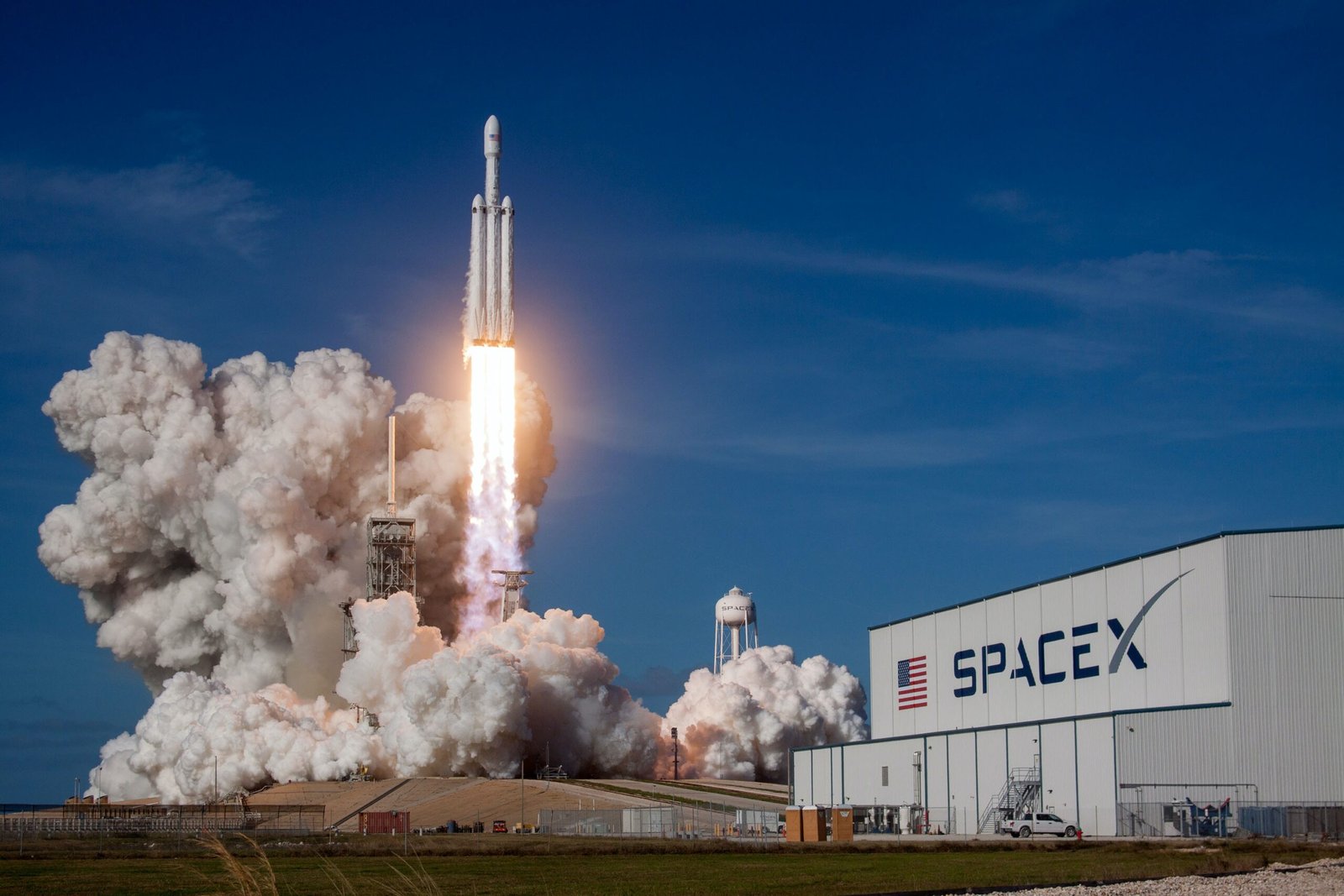
SpaceX has obtained the right to acquire AI coding startup Cursor for $60 billion later this year, the two companies announced Tuesday.
The aerospace company disclosed the arrangement in a post on X. “SpaceXAI and cursor_ai are now working closely together to create the world’s best coding and knowledge work AI.”
SpaceX added that the deal would pair Cursor’s product with its Colossus AI training infrastructure.
“The combination of Cursor’s leading product and distribution to expert software engineers with SpaceX’s million H100 equivalent Colossus training supercomputer will allow us to build the world’s most useful models,” the post said. “Cursor has also given SpaceX the right to acquire Cursor later this year for $60 billion or pay $10 billion for our work together.”
Deepika Giri, AVP and head of AI research at IDC Asia/Pacific, said the contractual exposure is the immediate concern for enterprise buyers.
“Cursor’s existing zero-data-retention agreements with model providers like OpenAI and Anthropic could be challenged under the new SpaceX ownership, which might quite likely renegotiate or terminate subprocessor relationships,” Giri said. “It is likely that Cursor will cease to maintain model neutrality, which will work in favor of xAI.”
Cursor frames it as a compute deal
The startup, developed by San Francisco–based Anysphere, confirmed the tie-up in a short company blog post the same day.
“We’ve wanted to push our training efforts much further, but we’ve been bottlenecked by compute,” the company said. “With this partnership, our team will leverage xAI’s Colossus infrastructure to dramatically scale up the intelligence of our models.”
The blog post said Cursor released Composer less than six months ago as its first agentic coding model, that Composer 1.5 scaled reinforcement learning by more than 20 times, and that Composer 2 reached frontier-level performance at a fraction of the cost of other models.
Cursor co-founder and chief executive Michael Truell addressed the deal in a post on X. He said he was “excited to partner with the SpaceX team to scale up Composer,” calling the arrangement “a meaningful step on our path to build the best place to code with AI.”
Nitish Tyagi, principal analyst at Gartner, said Cursor’s in-house model carries a constraint that the announcement did not address. “Composer is fine-tuned on the Chinese base model Kimi 2.5, making it unsuitable for organizations with restrictive governance policies,” Tyagi said.
Cursor’s enterprise footprint
Cursor says more than half of the Fortune 500 use its product, with customers including Nvidia, Salesforce, Uber, Stripe, and PwC.
SpaceX brings an AI stack of its own to the partnership. Its February acquisition of xAI pulled Musk’s AI lab, the Grok chatbot, and the X social platform under the rocket company.
Cursor’s parent, Anysphere, has been scaling the product through a run of acquisitions and funding rounds. The company agreed to acquire code review startup Graphite in December, adding pull request and debugging capabilities to its enterprise stack.
Cursor is built on a fork of Visual Studio Code and competes with GitHub Copilot, Anthropic’s Claude Code, and OpenAI’s Codex. Anthropic and OpenAI supply frontier models that Cursor resells through its IDE, and both vendors have launched competing coding tools of their own, according to product documentation on their websites.
What it means for enterprise buyers
Cursor’s enterprise contracts include data-handling provisions tied to its current model providers, including a commitment to no training on customer data by Cursor or the LLM providers it routes to, according to the company’s enterprise page.
Giri said enterprise buyers should move on contract language before the option window closes. “CIOs should consider demanding change-of-control clauses with 90 to 180-day notice on any subprocessor or model routing changes,” she said. “For buyers looking for neutrality of stack, this acquisition completely takes away the neutrality that Cursor offers.”
Tyagi said the partnership’s roadmap is the next variable to watch. “While the partnership appears directionally logical, key uncertainties remain — specifically whether the roadmap will prioritize Grok, Composer, both, or an entirely new model,” he said.
He also pointed to an earlier precedent. “Model access restrictions often move faster than innovation,” Tyagi said, citing Anthropic’s decision to restrict Windsurf’s access amid OpenAI acquisition rumours. The current announcement “could backfire for Cursor if major providers like OpenAI or Anthropic limit model access,” he said.
SpaceX and Cursor did not immediately respond to requests for comment.
Go to Source
Author: