




The GenAI boom has made hardware hot, both literally and figuratively. Unfortunately, the huge demand for infrastructure has completely disrupted the supply chain for chips, memory, and disk, making it nearly impossible to get the sort of hardware you need to run enterprise IT workloads–let alone HPC or AI jobs–without breaking the bank. So how can the average Joe navigate this brave yet expensive new world?
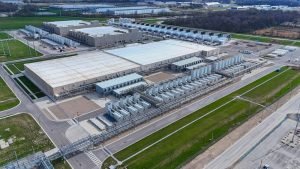
These are unusual times. The GenAI boom has led to a surge in construction of data centers around the country and the world. In the United States, there are approximately 3,000 data center projects under construction or planned, which will bolster the 4,000 that already exist. Hyperscalers and AI giants are behind many of these AI factories, which can span a million square feet of space and consume up to a gigawatt of power.
(Matthew-G-Eddy/Shutterstock)
Beyond the need for concrete, steel, and copper piping to build the data center itself (let alone the electricity to power them and the water to cool them), you need servers, memory, and storage to put inside of them. Problem is, the cloud giants and AI big wigs have practically snapped up all available supply.
The good news is the law of supply and demand has held. The bad news is that this law means that prices for processors, storage, and memory have soared.
Canceled Orders
Consider what’s happened with regular DDR memory. As the demand for high-bandwidth memory (HBM) has soared, the three primary memory chip makers–SK Hynix, Samsung, and Micron–have cut back on production of regular DDR memory. The result is that the cost of regular DDR memory has increased several hundred precent over the past six months.
This has caused a raft of problems for downstream tech users, including for RapidScale, a cloud provider owned by Cox Communications. RapidScale typically buys a number of servers every year for its growing cloud business, but the requisition process is anything but normal this year.
“A server fully populated with 2TB of memory in December was like $30,000,” said Duane Barnes, the president of RapidScale. “That same server today is $80,000.”
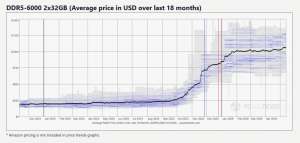
DDR-5 memory prices have increased by about 300% in the past eight months (Source: PCPartPicker.com)
The increases have led OEMs to make hard decisions about their businesses. Earlier this year, RapidScale placed a $1.2 million order for new servers with a major OEM provider. Instead of delivering the servers at the agreed-upon price, the computer maker welched on the agreement and tried to increase the cost by 300%, Barnes said.
“We’re certainly not the only customer they decided to not honor their orders with,” Barnes said in an interview. “If I sold something underwater to a client, I’d still honor that and make it up on the next order and the next customer, just like any normal business would do. They chose to take a different path, which is their decision, their business. But ultimately, I don’t think that’s a good way to handle your business.”
(HPCwire reached out to the server maker, whom we are not identifying at the moment, for comment for this story. But as of press time, we have not heard back. This story may be updated if the vendor chooses to respond and new data comes in.)
Shared Burden
Other vendors are taking a more open approach to dealing with the unprecedented situation. In an open letter posted April 23, Charlie Giancarlo, the CEO and Chairman of the storage vendor Everpure (formerly Pure Storage), apologized to customers for increasing prices by an average of 70% since the beginning of the year. But more importantly, he provided some details and rationale behind the price hike.
“A 70% increase might seem unconscionable until one understands the reality behind it,” Giancarlo wrote in the blog post. “Everpure’s input costs of many high-volume semiconductor components have surged between 300

Server makers are increasing prices (Timofeev Vladimir/Shutterstock)
% and 900% (4x to 10x) since mid-2025. In some cases, suppliers could not supply committed volumes because of surging demand, requiring us to find alternative sources (at higher prices) to meet delivery promised times.”
As Giancarlo noted, prices began to rise in the middle of the third quarter of 2025. Then the prices essentially doubled from December to January, and doubled or tripled again between February and March. Despite the rising costs through January, Everpure honored the prices it quoted customers with terms of 60 to 90 days.
The company also told its customers and channel partners about price hikes coming in the new fiscal year, which started February 1. Everpure has also moved to 30-day terms to minimize its exposure to continued hikes in component costs, which other vendors are also doing.
“We are keeping our price increases significantly below our actual supply chain cost increases,” Giancarlo wrote. “We will not profiteer from this crisis….We are choosing to share the burden alongside our customers.”
What This Means To Customers
The reality is that everything in the data center has gotten more expensive. Every customer’s situation is different, but they still have options.
One option is to source more computing capacity from the cloud instead of expanding on-prem. After all, the hyperscalers are the ones snapping up huge numbers of processors, memory chips, and NVMe drives, in preparation for an expected surge in demand for AI workloads.
As Brandon Whitelaw, the SVP and Head of Product at storage vendor Qumulo, noted in a recent BigDATAwire story, the big cloud companies have spent $700 billion in infrastructure this year, essentially cornering the market. There may be deals to be had with cloud providers, especially if OEMs are having trouble sourcing gear.

(GenAI/Shutterstock)
“Back in 2021, the top five hyperscalers spent about $100B, on par with the Big Seven Enterprise hardware vendors,” Whitelaw wrote in “The Cloud Already Ate Your Hardware Lunch.” “In 2025, the top five had jumped to $410B, and their year-over-year increase to $700B – that is double the entire Big Seven’s spend at $145B.”
Whitelaw recommends that customers take the time to implement a unified data fabric as one way to reduce storage costs. By eliminating data silos across a single fabric, total storage requirements can go down and efficiency goes up. Unified data fabrics also enable customers to more efficiently utilize hybrid cloud storage environments that span on-prem and cloud, allowing customers to shift storage according to price signals.
Barnes, the RapidScale president, advises customers to adopt FinOps practices to cut spending on cloud environments and increase utilization of existing investments. RapidScale provides FinOps services as part of its cloud offering, but any customer can adopt FinOps, for cloud or on-prem environments.
“I’ve got infrastructure. I think I need more, but do I really need more?” Barnes said. “We can come in and show you modern techniques to optimize that and then build a plan that’s more economically sound. in bite size chunks, to get you through the next few years of this chaos.”
Cloud computing has been dinged for being more expensive than on-prem for many types of workloads with steady and predictable demand, a category that includes some HPC and AI workloads. For a primer on the three main ways that FinOps can cut your bill, check out this BigDATAwire story from April 2025.
The final option is to simply wait out the storm and hope that it blows over in a year or two. Barnes said he has spoken to many CIOs and VPs who simply are punting on server upgrade projects for 2026. “They’re hoping the prices come down next year,” he said. “It’s sort of like the energy crisis. If I don’t need to take a vacation, I’m not going to drive my car to Florida for and pay six bucks a gallon for gas.”
Unfortunately, it doesn’t look as though the prices will come down any time soon. New chip fabrication plants are being built, but they won’t come online any time soon. For instance, Micron is building a new plant in Upstate New York, but it won’t start churning out DDR or HBM until 2028.
These are exciting times, to be sure. The AI gold rush will likely make a few companies who hit paydirt extraordinary wealthy, while making the tool providers merely rich. Unfortunately, the AI boom is also upsetting the supply chain, which impacts everybody who needs a computer. Customers who create a plan for navigating these disruptions are likely to come out of the boom better than those who don’t.
Note: This article first appeared on HPCwire.com
Related Items:
The Cloud Already Ate Your Hardware Lunch
WD Bullish on Spinning Disk Amid AI Boom
How the Memory Shortage Is Impacting AI and HPC Projects
The post Navigating Supply Disruptions Generated by Rising AI Waters appeared first on BigDATAwire.
Go to Source
Author: Alex Woodie