



Snowflake’s $6B AWS Bet Signals Where Enterprise AI Spending Is Headed Next

Cloud data giant Snowflake has committed $6B to AWS through 2032, reflecting growing confidence in future demand for its platform. The deal is the latest example of how the biggest winners in the AI era may not be the companies building models, but the companies that enable enterprise data. The agreement extends the two companies’…

Read More

Converging File and Object Storage for AI-Scale Data Architectures

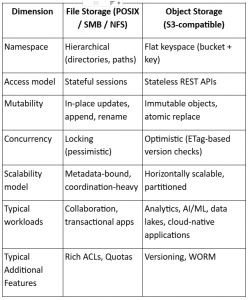
The same dataset should not need to exist twice just to be useful. Yet in most environments, it does. One version lives in a file system, shaped for enterprise users and applications that expect paths, directories, and mutable state. Another version is exported into object storage so distributed engines and AI pipelines can process it…

Read More

SpaceX, OpenAI, and Anthropic IPOs: Can Wall Street Finance the AI Boom?

Elon Musk’s SpaceX has filed for what could become the largest IPO in history. It could potentially raise a staggering $75 billion. OpenAI is targeting a public offering as soon as September, based on reports. Anthropic is said to be exploring a listing later this year. No surprise that these IPOs have generated a lot…

Read More

AI-Driven Science Is Turning Data Storage Into a Competitive Advantage

AI for science is changing what storage infrastructure needs to do. Most of this infrastructure was originally built around simulations and long term storage. Now AI systems need constant and real time access to massive amounts of scientific data. As a result, the role of storage inside scientific computing environments is starting to change. Many…

Read More

Navigating Supply Disruptions Generated by Rising AI Waters

The GenAI boom has made hardware hot, both literally and figuratively. Unfortunately, the huge demand for infrastructure has completely disrupted the supply chain for chips, memory, and disk, making it nearly impossible to get the sort of hardware you need to run enterprise IT workloads–let alone HPC or AI jobs–without breaking the bank. So how…

Read More

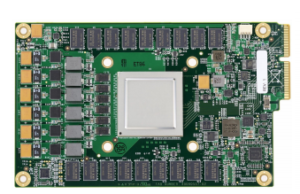
Google Expands TPU Chip Strategy Through New Blackstone Partnership

For years, hyperscalers built infrastructure largely for their own cloud ecosystems. However, AI is starting to break that model. The sheer cost of accelerators, data center expansion, and power requirements is pushing AI infrastructure toward a more distributed financing approach, where outside capital plays a much larger role.  Google’s reported TPU partnership with Blackstone is…

Read More

Why NextEra’s $66.8B Dominion Deal Could Reshape AI Infrastructure

The reported $66.8B bid by NextEra Energy for Dominion Energy is one of the largest utility mergers in U.S. history. At BigDATAwire we have covered how electricity has emerged as a major bottleneck for AI. Yes, the hardware matters, but those aren’t any good if they don’t get the power they need.  Training clusters and…

Read More

Scale AI Joins DOE’s Genesis Mission as Scientific AI Shifts Toward Data Infrastructure

AI infrastructure and software company Scale AI has signed an MOU with the Department of Energy to support the Genesis Mission – the collaborative AI for science initiative bringing together leading national labs and advanced computing environments.  The move adds another commercial AI infrastructure player to an ecosystem that is increasingly centered around integrating AI…

Read More

SAP Acquires Dremio and Prior Labs, But Can It Solve Enterprise AI’s Core Problem?

SAP is moving to fix a problem that has quietly held back enterprise AI. The company is acquiring, targeting two weak points that most organizations still struggle with: fragmented data and poor AI performance on structured datasets. At its core, the problem is simple. Enterprise AI struggles because data is often not accessible in real…

Read More

What Anaconda’s Outerbounds Deal Says About Where AI Breaks

The recent move by Anaconda to acquire Outerbounds is aimed directly at a gap between experimentation and production, where workflows often fail to run consistently across environments. Instead of replacing existing tools, it introduces a layer that coordinates how workflows are defined, executed, and tracked. The goal is not just governance, but consistency. A way…

Read More