



AI at scale: What engineering teams are confronting

For the past few years, enterprise AI conversations have been dominated by optimism: bigger models, more pilots, faster automation. The prevailing assumption was simple — pick the right AI platform and progress would follow. Reality has been far less forgiving. Most IT leaders have discovered that production AI is significantly harder than early experimentation suggested….

Read More

What can you do with quantum computing today?

Among today’s emerging technologies, only agentic AI rivals quantum computing in the hype and promises surrounding its enterprise impact. While significant research on quantum computing continues, there are opportunities to learn about and pilot quantum computing today. It took 20 years to go from primitive virtual machines bought on credit cards to the over $900…

Read More

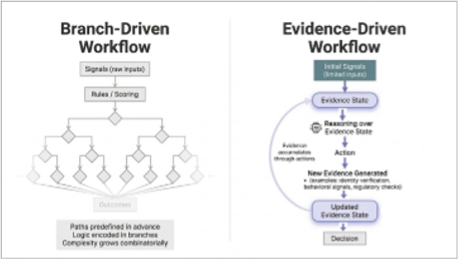
Evidence-driven workflows: Rethinking enterprise process design

From runtime architecture to process design In a recent InfoWorld article, I introduced the concept of the Agent Tier — a runtime architecture that separates deterministic enterprise execution from contextual reasoning. The core idea was straightforward: as enterprise workflows incorporate more signals and adaptive models, embedding contextual judgment directly inside branching logic leads to increasingly…

Read More

MongoDB targets AI’s retrieval problem

For all their technical capabilities, large language models (LLMs) still have a memory problem. They can lack the ability to retain context across conversations, and don’t always contain the frameworks to let them access relevant data, ultimately making their results unreliable and untrustworthy. NoSQL database pioneer MongoDB is taking on this problem, releasing new persistent…

Read More

Building AI apps and agents with Microsoft Foundry

At first glance, Microsoft Foundry looks like a big grab bag of every AI-adjacent service that Microsoft has offered in the last decade, plus some new ones. In Microsoft’s own words, “Foundry consolidates several previous Azure AI services and tools into a unified platform” and “unifies agents, models, and tools under a single management grouping.”…

Read More

Diskless databases: What happens when storage isn’t the bottleneck

In 2021, I was developing software for an aerospace manufacturer and met with our machine learning team to discuss innovative approaches for tracking FOD (free-orbiting debris), a major security and operational concern in the industry. What struck me wasn’t the algorithms or tracking equipment, but the terabytes of data (up to petabytes) that were being…

Read More

Addressing the challenges of unstructured data governance for AI

Large enterprises in regulated industries, especially in data-rich financial services and insurance, have invested significantly in data governance programs. Other businesses have been catching up as part of their efforts to become more data-driven organizations. Data governance often starts with defining policies, classifying data sources, establishing data catalogs, and communicating non-negotiables.  But look a little…

Read More

Best practices for building agentic systems

Agentic AI has emerged as the software industry’s latest shiny thing. Beyond smarter chatbots, AI agents operate with increasing autonomy, making them poised to drive efficiency gains across enterprises. “Agentic refers to AI systems that can take actions on behalf of users, not just generate text or answer questions,” says Andrew McNamara, director of applied…

Read More

AI has to be dull before it can be sexy

This week in New York, my Oracle team ran workshops for enterprise developers on building retrieval-augmented generation and agentic applications. Interest was so strong that we quickly had to figure out how to double the room’s capacity (much to the fire marshal’s chagrin). Interest in AI was clearly off the charts. But AI fluency was…

Read More