
AI is being blamed for job cuts. New data offers a different story. – The Business Journals
AI is being blamed for job cuts. New data offers a different story. The Business Journals Go to Source Author:



AI is being blamed for job cuts. New data offers a different story. The Business Journals Go to Source Author:
AssureSoft Recognized for Top Customer References and Excellence in Customer Service GlobeNewswire Go to Source Author:
For years, artificial intelligence has been sold as something close to magic. Feed it enough data, train a sufficiently complex model, and intelligence will emerge. Predictions improve. Decisions accelerate. The system “learns.” That story is convenient. It’s also increasingly misleading. The dominant architecture of AI today assumes a clean separation: data is raw material, models…
Quo Taps Anthropic’s Claude to Turn Call Data Into Actionable Customer Intelligence TipRanks Go to Source Author:
RFG Advisory Appoints Mark Gilbert and Jim Patrick to Board, Makes Strategic Investment in Zocks Business Wire Go to Source Author:
365 Data Centers Leverages Collective[i] to See Double-Digit Revenue Growth Within Six Months GlobeNewswire Go to Source Author:
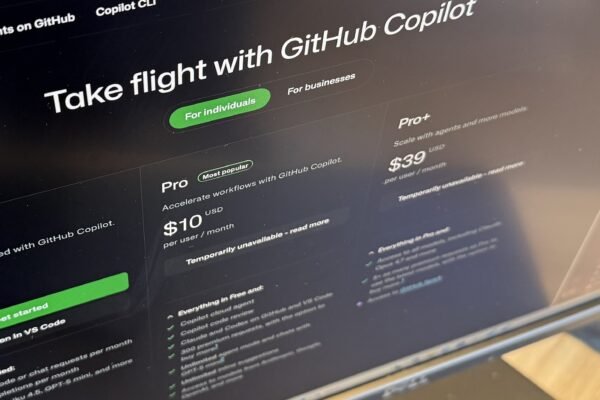
GitHub is moving its Copilot coding assistant to a usage-based billing model, replacing fixed subscription pricing with consumption-based charges as demand for AI-driven development workloads increases. The change, announced in a company blog, will take effect on June 1 and will apply to Copilot Pro, Pro+, Business, and Enterprise plans. Under the new model, usage…

Xiaomi has released and open-sourced MiMo-V2.5 and MiMo-V2.5-Pro under the MIT License, giving developers another potentially lower-cost option for building AI agents that can run longer tasks such as coding and workflow automation. Both models support a 1-million-token context window, the company said. MiMo-V2.5-Pro is designed for complex agent and coding tasks, while MiMo-V2.5 is…
Mphasis appoints Richard Miller as Global Head of Insurance Business PR Newswire Go to Source Author:

OpenAI has released Symphony, an open-source specification for turning issue trackers such as Linear into control planes for Codex coding agents. Instead of asking an AI tool for help with one coding problem at a time, Symphony is designed to let agents pick up work from an issue tracker, run in separate workspaces, monitor CI,…