



For years, hyperscalers built infrastructure largely for their own cloud ecosystems. However, AI is starting to break that model. The sheer cost of accelerators, data center expansion, and power requirements is pushing AI infrastructure toward a more distributed financing approach, where outside capital plays a much larger role.
Google’s reported TPU partnership with Blackstone is a major signal that AI compute is evolving into a standalone infrastructure business. The new TPU cloud company will offer efficient data center capacity and Google Cloud’s Tensor Processing Units (TPUs) as a compute-as-a-service offering.
As part of the deal, Google will supply new TPUs purpose built for processing AI computations to Blackstone, which is one of the world’s largest owners of data centers. The New York City based company manages more than $1.3T in total assets and roughly $150B in data center assets globally. Its largest data center platform is QTS, which was acquired in 2021 for $10B.
Blackstone is making an initial $5B investment to the venture to bring 500 MW of capacity online in 2027, with plans to scale this further over time. The project is reported to scale to $25 billion including debt financing.
The new unnamed company will be US-based, and will be led by Benjamin Treynor Sloss, who most recently served as Google’s chief programs officer.
What’s in it for Google? First, it will help Google expand its TPU ecosystem to go beyond the traditional boundaries of Google Cloud. It will give more companies access to Google’s AI hardware. At the same time, Blackstone will cover part of the enormous costs of building new AI data centers and power infrastructure.
There is also a competitive angle to this partnership. With a new TPU company, Google aims to loosen Nvidia’s grip on the AI hardware market.
Nvidia still controls much of the AI software ecosystem and has become somewhat of a dominant standard for large scale AI workloads. By creating a separate TPU-focused cloud company, Google can put its own AI chips in front of more customers, including companies that may not want to fully run on Google Cloud itself.
In other words, Google is trying to increase adoption of its TPU hardware and reduce dependence on Nvidia’s ecosystem by making TPUs easier to access at large scale.
“We see a generational opportunity to invest capital at scale building AI infrastructure,” said Jon Gray, President and COO of Blackstone. “This new company has enormous potential as it helps to meet the unprecedented demand for compute. We are incredibly proud to partner with Google – bringing together their world class TPUs and AI capabilities with Blackstone’s exceptional strength in energy and digital infrastructure.”
Other major cloud providers, including Amazon Web Services, have also been developing their own AI chips as demand for accelerators continues to surge. Google was one of the earliest hyperscalers to move in that direction, introducing its first TPU back in 2015.
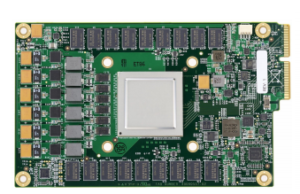
While GPUs are designed to handle a wide range of computing tasks, Google positions TPUs as specialized hardware optimized for specific AI workloads more efficiently. This includes use for large scale inference and emerging agentic AI applications. Google already uses TPUs internally to run its Gemini models, while companies such as Anthropic and Citadel Securities are also TPU customers.
One reason Nvidia maintains such a strong position across the AI ecosystem is that GPUs remain more versatile. They support a broader range of software frameworks, scientific workloads, and custom model architectures. In comparison, TPUs tend to perform best inside software environments and workloads that are specifically optimized around Google’s infrastructure stack.

(Michael Vi/Shutterstock)
Demand for AI accelerators surged following the launch of OpenAI’s ChatGPT in 2022, helping propel Nvidia to become the world’s most valuable company by 2024. Alphabet, Google’s parent company, briefly overtook Nvidia in market value earlier this month.
Right now hyperscalers normally use chips to pull customers deeper into their cloud ecosystems. This deal slightly changes that model because Google is effectively allowing TPU access through a separate infrastructure company.
Thomas Kurian, CEO of Google Cloud, shared, “This joint venture with Blackstone helps meet growing demand for TPUs, which are optimized specifically for efficiency and performance in the AI era. Together, we’re accelerating AI transformation and providing more options for organizations to access accelerated compute capability.”
The partnership could become an important test case for whether AI infrastructure eventually evolves beyond the traditional hyperscaler model. Rather than keeping proprietary accelerators tightly confined inside their own cloud platforms, companies such as Google may increasingly look for outside financing and alternative distribution models to scale AI compute faster.
If successful, the venture could signal a broader shift in how AI infrastructure is financed, deployed, and consumed across the industry.
If you want to read more stories like this and stay ahead of the curve in data and AI, subscribe to BigDataWire and follow us on LinkedIn. We deliver the insights, reporting, and breakthroughs that define the next era of technology.
The post Google Expands TPU Chip Strategy Through New Blackstone Partnership appeared first on BigDATAwire.
Go to Source
Author: Ali Azhar